
When Cleaning Up Blood Use...
Accidents are inevitable and bound to happen. You need careful and delicate attention to manage accidents when they occur at your office.
One of the most potent accidents that can happen at your office is blood spills. Suppose anyone gets into contact with this hazardous fluid. In that case, it can expose you to various transmissible bloodborne diseases, such as HIV, Hepatitis B, Hepatitis C, MRSA, and other pathogens. Instead of wiping it away with just a damp cloth, you should take blood spills seriously and respond appropriately.
If you're not certain about how to clean up a blood spill, take a look at our 10-step clean-up procedure.
Ten Step Blood Clean-up Procedure
1. Gather All Equipment
Protection comes first. Equip yourself with the following protective gear
• Disposable gloves,
• Protective gown
• Eyewear for accidental splashes
• Protective cap
• Mask
• Biohazard Bag and labels
• Disinfecting towels
Make sure the items are not compromised in terms of quality.
2. Remove Potential Dangers
Use a brush and dustpan to Remove broken glass or other sharp fragments that could break through your protective gear. Place each piece in a sharps container that won't leak. Never remove them by hand.
3. First Round
To absorb up as much blood as possible, cover the spill with sturdy towels and let them soak the blood to the maximum. If the area is still covered in blood, discard the towels used in a biohazard bag.
4. Second Round
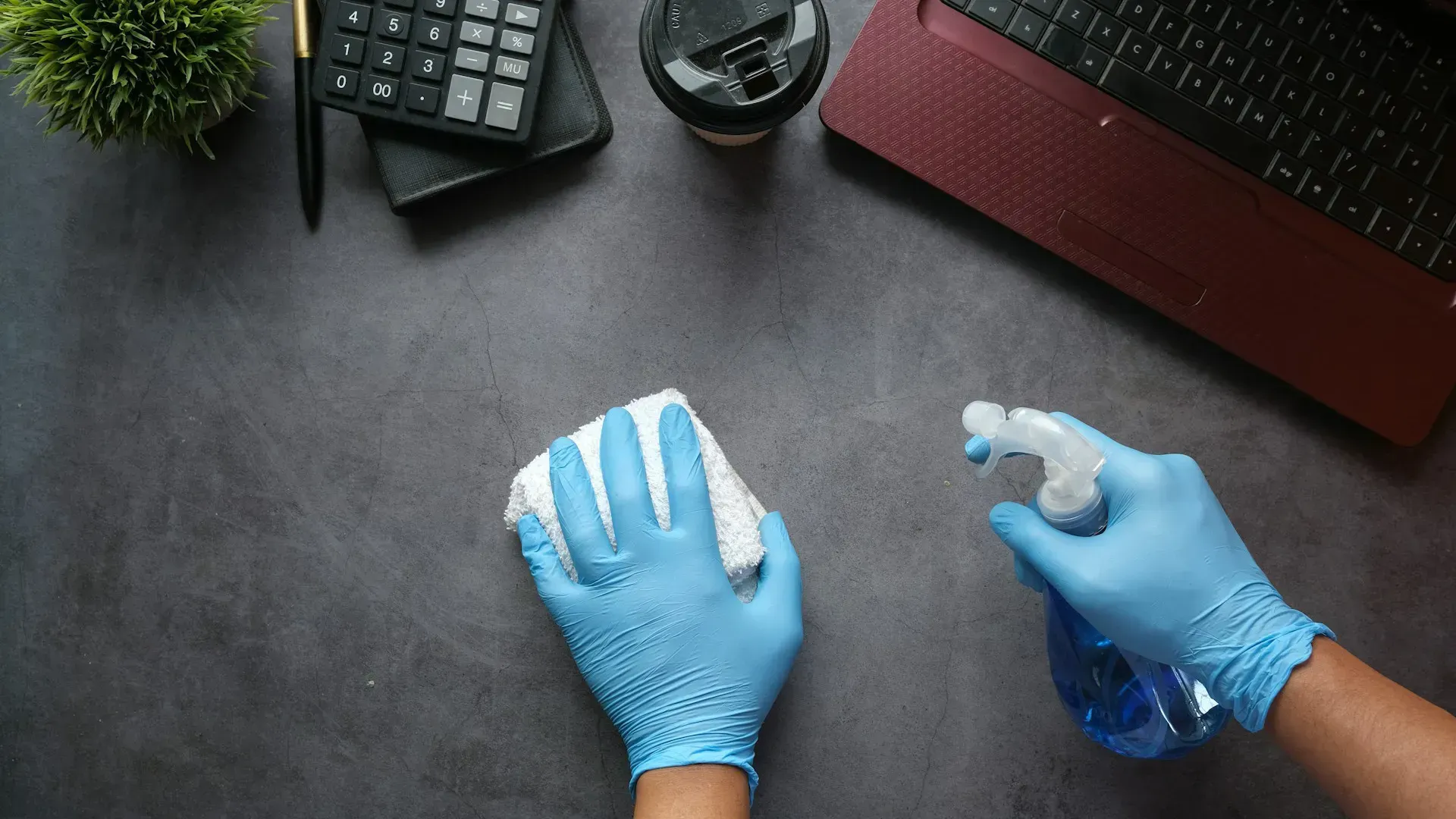
Once the towel has soaked most of the spill, apply a disinfectant and allow at least 10 minutes for it to rest. After that, scrub the area using a durable towel, working your way from outside towards the center. Dispose of it in a biohazard bag afterward.
5. Third Round
Finally, apply a damp towel to remove any residue or disinfectant solution remaining. Once again, dispose of the towels in a biohazard bag and let the surface air dry.
6. Get Rid of the Equipment
When you're finished scrubbing and cleaning, carefully discard your protective gear. Ensure that no other surfaces are contaminated throughout the procedure. Place all the items in a bag, then seal and mark it with a biohazard label.
7. Decontaminate
Decontaminate the surface once more, just for precaution. Reusable Equipment like dustpans, brooms buckets, etc., should also be decontaminated. Use a registered disinfectant and let it soak for 10 minutes. Proceed with a rinse with fresh water.
8. Check
Conduct a double-check of your body, clothes, and furniture for any contamination. It is preferred to enlist the help of a colleague or manager for this part of the step.
9. Thoroughly Wash Hands
Wash your hands and arms rigorously with disinfectant soap. You can also choose to use disinfectant wipes as a supplementary precaution after a thorough cleaning.
10. Properly Dispose of Toxic Waste
Finally, it's time to get rid of the contaminated garbage. Instead of disinfecting the towels or Equipment by washing, discard them in labeled bags.
Implementing these 10-steps will ensure the safety of individuals in your workplace. If you are dealing with a blood spill of a serious magnitude that is beyond your capacity, consider hiring Haimen Cleaning Service. Our team of expert cleaners will be delighted to assist you in the cleaning process.
For booking, click
here!